Trenchless repair rebuilds the line underground through one or two small access points instead of an open trench along its whole length. Less excavation, less restoration, and on most La Habra properties the work is finished in a day or two.
It matters more in La Habra than in most cities, and for a reason almost no homeowner knows until they get the bill: here you own the sewer lateral all the way to the main in the street, not just to the property line. Section 2 explains what the city’s code actually says and what it costs you.
SoCal Plumbing & Rooter camera-inspects the line first, tells you whether it can be lined or has to be burst, and gives you a written price before anything is dug. We are C-36 licensed (#1024189), which is what La Habra requires on this work.
Call (714) 482-3982 or book an appointment online. Free written estimates, no after-hours surcharge.
This is the part worth reading before you call anyone, because it decides who pays for what.
La Habra’s municipal code puts the whole lateral on the property owner. In the city’s words, the owner is “responsible for the maintenance, repair and upkeep of the connecting sewer and house sewer from the property owner’s structure up to and including the point of connection to the main sewer line.”
Read that last clause again: up to and including the point of connection to the main. The main runs under the street. So the run beneath your parkway, beneath the curb and beneath the roadway is yours — and so is the saddle where it ties in. The city maintains the main itself and nothing else.
Plenty of neighbouring cities draw the line at the property boundary and take on the street portion themselves. La Habra does not. It is the single most expensive assumption a homeowner here can make.
We pull the encroachment permit, schedule the inspection and meet the inspector. It is part of the job rather than a line item you find later.
Every foot of the right-of-way you have to open is excavation, traffic control, compaction and street restoration — and in La Habra that stretch of pipe is on your bill. Trenchless rebuilds the run between two access points instead of along its full length, so there is far less roadway to open, restore and get signed off.
On a lateral that crosses a parkway, a curb and part of a street, that difference is usually the largest single number in the estimate.
We're here when you need us. Call now or request service online.
Sewer laterals rarely fail suddenly. They degrade over years, and households adapt to the symptoms without registering them — running one fixture at a time, keeping a plunger by the toilet, calling for a snake-out every spring.
The pattern in La Habra is specific. The mature trees shading the older streets near the historic core are hard on aging clay laterals: roots find the joints, work in, and cause backups that keep returning no matter how many times the line is cleared. Snaking cuts the roots. It does not repair the joint they came through.
If several of these are true, the line needs a camera before it needs another snake:
Backups that return weeks after the line was cleared
The clearest sign of root intrusion rather than a blockage. Cutting roots buys you a season; the opening they grew through is still there and they grow back to it. If you are on an annual or twice-yearly snake-out, you are renting a repair.
More than one fixture draining slowly at the same time
A single slow sink is a fixture problem. A slow toilet and a slow tub and a slow kitchen line points at the main lateral they all share.
The toilet gurgles when the washing machine drains
Air being pushed back up the line because the lateral cannot clear the volume fast enough. It usually shows up on the washer because it discharges a lot of water quickly.
The lowest fixture backs up first
A downstairs toilet or a garage floor drain that overflows when you run water elsewhere in the house. Waste backing up at the lowest point means the restriction is downstream of everything.
Sewage smell in the yard or around the cleanout
A sealed lateral should not be detectable from outside. An odour along the line’s path, strongest after heavy use, means waste is escaping before it reaches the main.
A strip of lawn that is greener or softer than the rest
Effluent leaking from a cracked lateral fertilises and waters the ground directly above it. In summer the line’s path can be visible as a stripe of faster-growing grass running toward the street.
A dip or soft spot in the lawn, driveway or parkway
Water escaping underground washes out the soil supporting whatever is on top of it. A depression following the line’s route is a late sign and usually means a substantial break.
Drain flies, or rodents you cannot account for
Both find their way in through breaks in a sewer line. Persistent small flies near floor drains, or rats in a house that never had them, are worth a camera inspection before an exterminator.
The house was built before about 1970 and the lateral has never been replaced
Homes from that era were plumbed to the street in vitrified clay, jointed every few feet. Clay does not corrode, but the joints open as the ground moves and that is precisely where roots enter. If nobody has replaced it, it is original — and it is at the end of a normal service life.
Nothing gets quoted before the line is seen. We run a camera the full length of the lateral to the main, find the defect, measure how far out it sits and check the condition of everything around it. That footage decides the method, and you get to watch it.
Often the camera finds something cheaper than a replacement — a single root mass, a blockage, a short damaged section in an otherwise sound line. In those cases hydro jetting or a spot repair is the right answer and we will say so.
A resin-saturated liner is pulled through the existing lateral and cured in place, forming a new jointless pipe inside the old one. Because the new pipe has no joints, there is nothing for roots to re-enter through — which is what makes it a permanent answer to the root problem rather than another season bought.
Lining needs the host pipe to still hold its shape and line. It suits clay laterals that are cracked, root-infiltrated or leaking at the joints but structurally continuous, and it is the least invasive option available.
Where the old pipe is collapsed, badly offset or too far gone to line, a bursting head is pulled through it, fracturing the old pipe outward while drawing a new seamless HDPE line in behind. Two access pits instead of a full trench, and the new line can be a larger diameter than the original.
This is the method for a lateral that has already failed rather than one that is failing.
Trenchless is not universal and anyone who tells you it is has something to sell. Open excavation is the correct answer when the line has collapsed completely and there is no path left to pull through, when there is a severe belly or offset that lining would simply preserve, when the depth or a utility conflict makes access impossible, or when the failure is at the connection to the main itself.
We will tell you which one you are in after the camera, with the footage on screen. If the honest answer is a trench, you will get that answer.
Related: our full plumbing service in La Habra, drain cleaning when the problem is a blockage rather than the pipe, and trenchless sewer repair in Brea.
We're here when you need us. Call now or request service online.
Whether you're dealing with a plumbing emergency or a repair you've been putting off, we'll work with you to schedule service as quickly as possible. If your situation can't wait, our team is available for 24/7 emergency plumbing service.
Rather than guessing at the problem, our technicians carefully inspect the affected plumbing system to determine exactly what's causing the issue. Depending on the repair, this may include:
Finding the source of the problem first allows us to recommend the most effective repair.
Once we've identified the issue, we'll explain what we found in straightforward language and provide a free estimate before any work begins. If multiple repair options are available, we'll explain the advantages of each so you can make an informed decision without pressure.
Yes, where the work involves excavation in the public right-of-way, which most lateral repairs do because the connection point sits under the street. La Habra’s code requires the property owner to obtain an encroachment permit before the work starts, requires the contractor to hold a C-36 Plumbing or Class A license, and requires the line to be tested for infiltration and inspected by the city before anything is backfilled. We handle all of it.
It is worth caring about. Unpermitted sewer work surfaces during escrow, and a bid that is materially cheaper than the rest is sometimes cheaper because there is no permit in it.
Not in La Habra. The code makes the owner responsible up to and including the point of connection to the main. The city maintains the main; everything feeding into it is yours. This is the question we get asked most and the answer surprises nearly everyone.
Not something anyone can quote honestly over the phone. It depends on the length of the run, the depth, whether it can be lined or has to be burst, how much of it sits in the right-of-way, and what has to be restored afterward. You get a written, itemised estimate after the camera inspection and before any work begins, and the estimate is free.
What we can tell you is what moves the number, so you can compare bids on the same footing: the method, the linear footage, how much street or hardscape is opened, whether the encroachment permit and city inspection are included, and whether restoration is in the price.
Most trenchless lateral replacements are a one- or two-day job once the permit is in hand. Lining is typically faster than bursting. Permit turnaround with the city is the variable, and we will give you a realistic date rather than an optimistic one.
That is the whole point of doing it trenchless. The work runs between access points rather than along the full length of the line, so a mature lawn, a driveway or hardscape usually stays intact. Where an access pit has to land somewhere visible we will show you where before we start.
Cured-in-place liners are rated for a service life on the order of fifty years, and because the new pipe is jointless there is no re-entry point for roots. That is the part that matters on a La Habra lateral — the failure mode that put you here cannot recur the same way.
Not through a lined or replaced lateral, because the joints they used are gone. Roots return after snaking precisely because snaking does not close the opening. If someone is clearing your line every year and calling it maintenance, that is the distinction to ask them about.
Usually not for the pipe itself. Insurers generally treat a lateral that failed through age or root intrusion as a maintenance issue, which is excluded. Some carriers sell optional service line coverage as an add-on, and resulting damage inside the home is a separate question that often is covered. Coverage varies between carriers, so read your policy or call your agent rather than assuming either way.
Worth knowing that La Habra splits the two differently. The sewer lateral is yours all the way to the main, as above — but on the water side the city owns the main and the meter, and your responsibility starts at the meter. If the symptoms point at supply piping rather than drainage, see water line replacement and repiping in La Habra. Same crew either way.
Not sure what you’re dealing with? Call (714) 482-3982 or book online and we’ll put a camera down the line.
We're here when you need us. Call now or request service online.
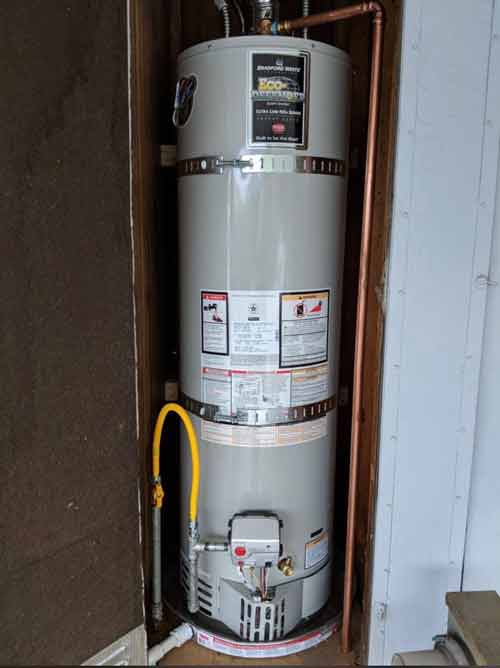
Installed a new high-efficiency water heater to provide reliable hot water and improved energy savings.
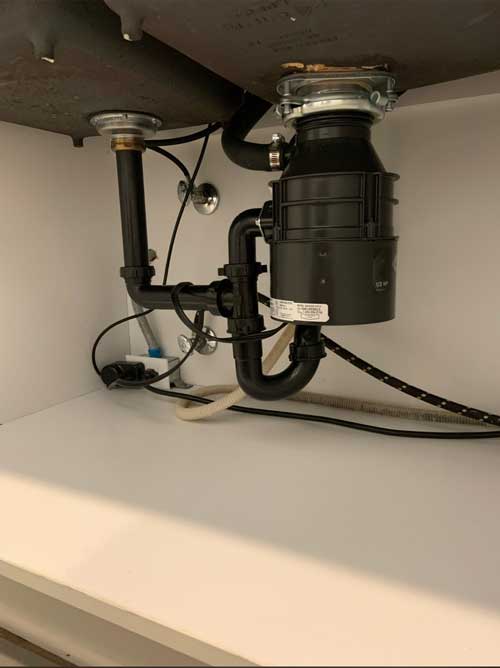
Replaced an outdated garbage disposal with a quiet, dependable unit for smoother everyday kitchen use.
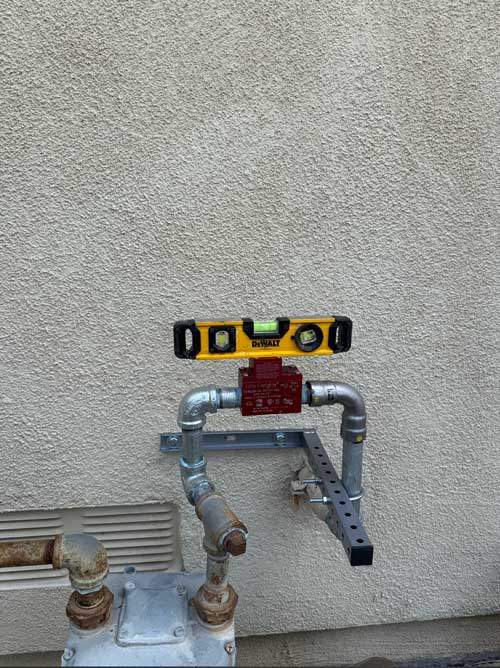
Installed an emergency gas shut-off valve to improve safety and meet current earthquake code requirements.
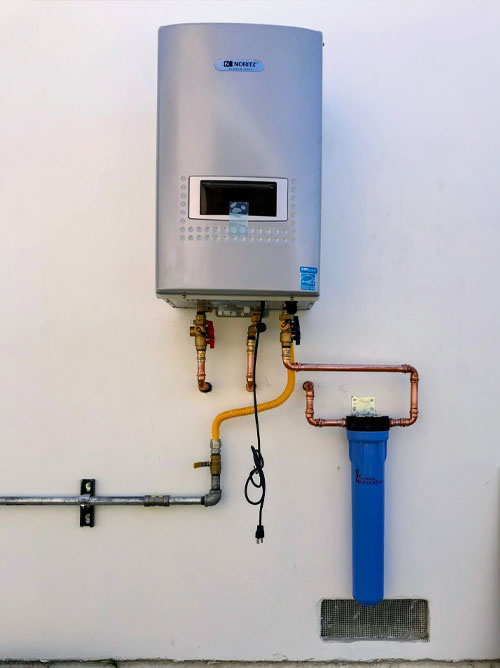
Installed a high-efficiency tankless water heater for endless hot water and lower monthly energy costs.

24/7 response for burst pipes, leaks, and overflows. No surcharge.

Fast, reliable fixes for leaks, pipes, fixtures and more. We get it done right.

Clearing clogs and slow drains with advanced equipment.

Expert repair and replacement for damaged or clogged sewer lines.

High-pressure cleaning that removes stubborn grease, roots and buildup.

From running toilets to new installations, we handle it all.
We locate and repair slab leaks with minimal damage to your home.

Using electronic detection, we find hidden leaks accurately.
Professional installation of standard and high-efficiency water heaters.

No hot water? We repair all makes and models quickly and efficiently.
Energy-efficient tankless solutions for endless hot water.

From gas leaks to damaged lines, we keep your property safe.
Licensed & Insured
CA C-36 Licensed #1024189
Local & Trusted
Proudly serving LA & OC for over 20 years
Excellent Reviews
Quality work, every time