When a sewer line fails in Whittier, the line running from your house to the city main belongs to you, not the city. That means the diagnosis matters as much as the repair: a spot repair and a full lateral replacement can be ten thousand dollars apart, and the only way to know which one you actually need is to put a camera down the line.
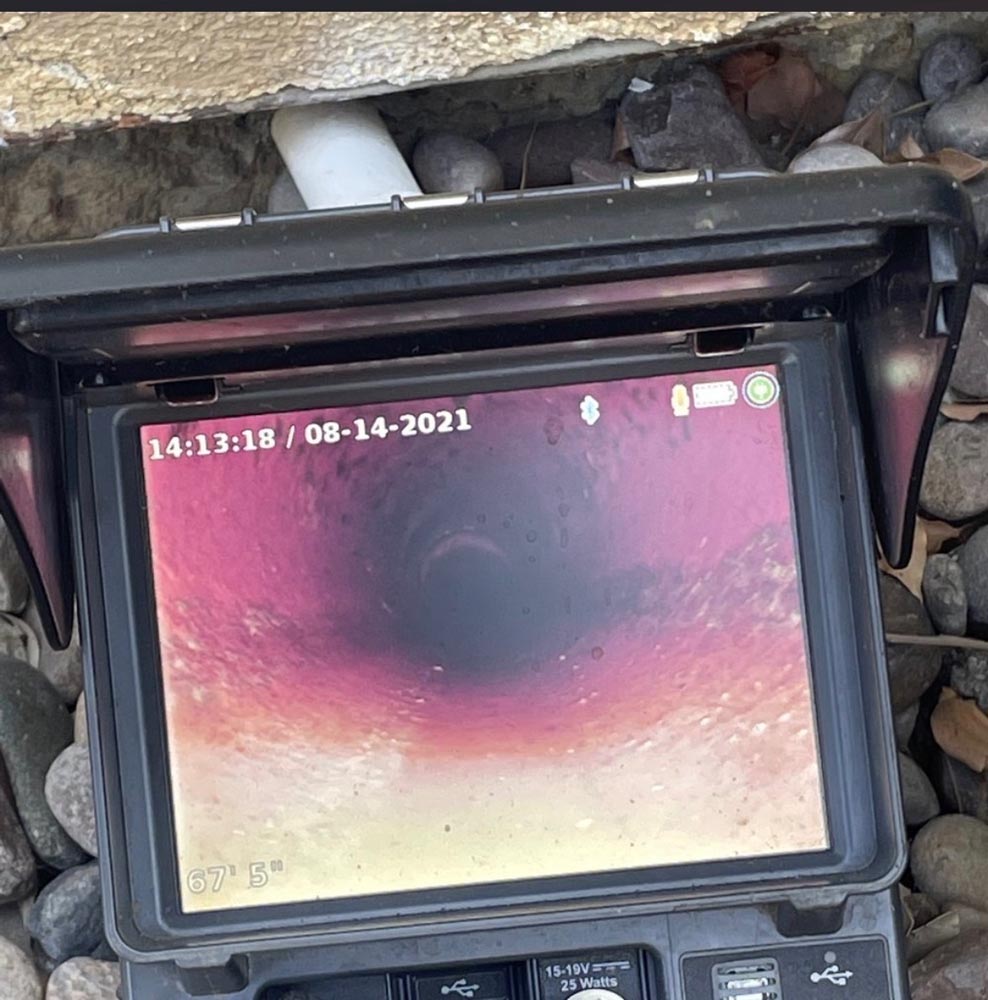
SoCal Plumbing & Rooter cameras every sewer line before we quote it. You see the footage, you see where the problem is and how far down the run it sits, and you get a written estimate based on what’s in the pipe rather than a guess from the cleanout. It’s also what the City of Whittier requires before it will issue a permit — so the inspection isn’t an upsell, it’s step one.
Whittier’s housing stock is older than most of north Orange County, and the sewer laterals underneath it reflect that. Homes in Uptown Whittier, Hadley-Greenleaf and the Craftsman and Spanish Revival streets around Whittier College were largely built between the 1900s and the 1940s, and many are still served by their original vitrified clay laterals. Clay doesn’t corrode the way cast iron does — it cracks, and it separates at the joints.
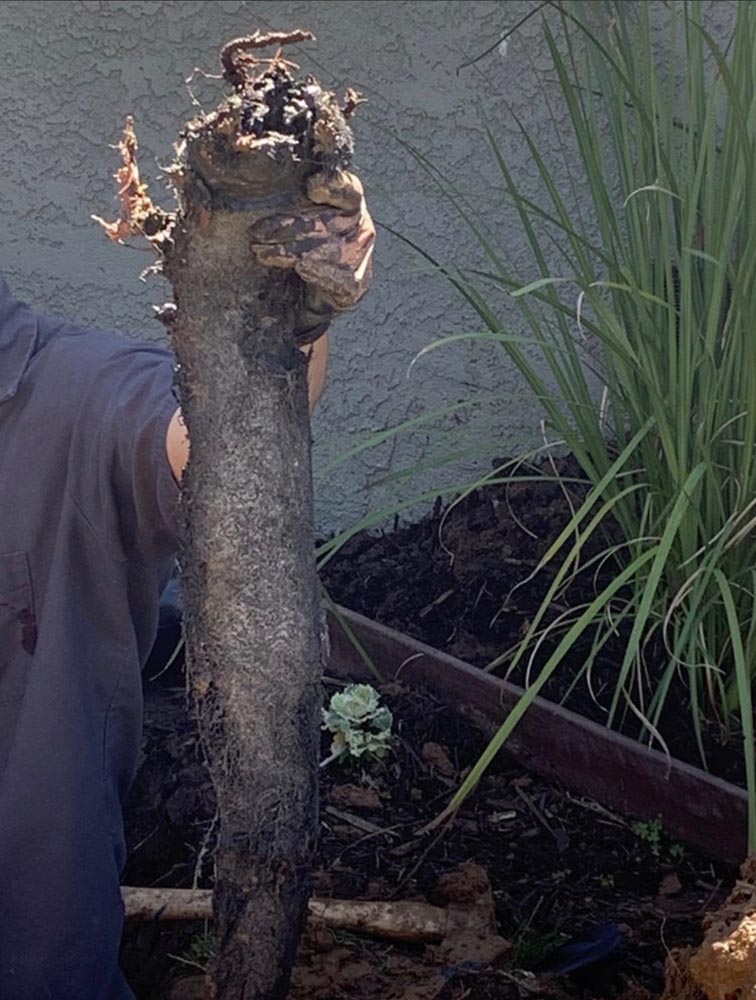
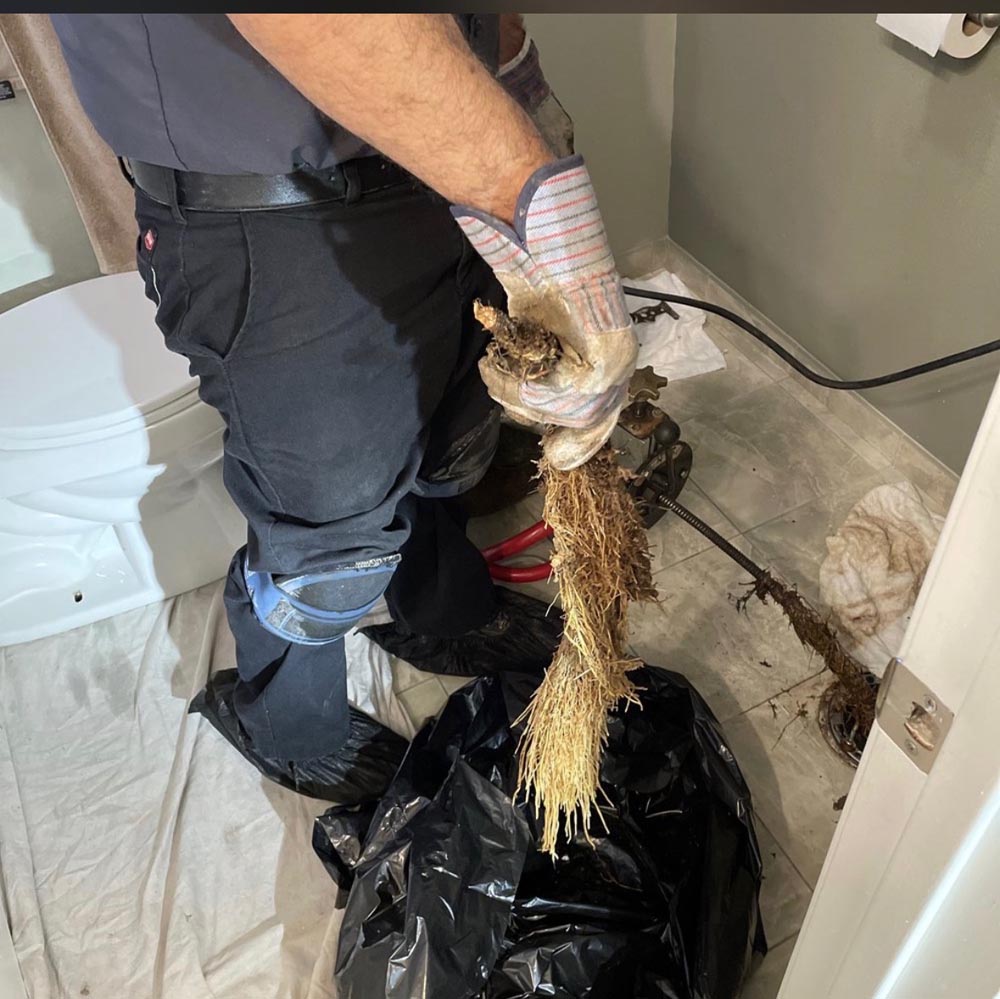
That matters because of what grows above it. The mature ficus, liquidambar and pepper trees that make Whittier’s older streets what they are send roots toward the only reliable water source in dry soil: the seep at a cracked lateral joint. Once a root finds the joint it widens it, and the line goes from a slow drain to a full blockage over a season or two.
The post-war tracts in East Whittier and Friendly Hills have a different problem. Those laterals are typically cast iron or early ABS, and after seventy years the cast iron has scaled inward until the usable diameter is a fraction of what it started as. On the hillside lots backing onto the Puente Hills, long lateral runs on a grade are also prone to bellying — a low section where the pipe has settled and waste collects instead of flowing through.
In South Whittier and West Whittier–Los Nietos, where lots are larger and the run from house to main is longer, we most often find a combination: an original clay section near the house, a patch repair somewhere in the middle from a previous owner, and root intrusion at the transition between the two.
None of this is guesswork on a given property. It’s what the camera tells us in the first twenty minutes.
We're here when you need us. Call now or request service online.
The difference between a clog and a failing sewer line is usually scope. A single slow sink is a branch line. When the problem shows up in more than one fixture — or moves around the house — the blockage is in the main lateral, and clearing it without looking at it just resets the clock.
If you recognise two or more of the following, the line is worth a camera inspection before it backs up into the house:
Multiple fixtures backing up at once
A toilet and a tub that back up together are sharing a blocked main. If the lowest fixtures in the house go first, that’s the lateral, not the fixture.
The toilet gurgles when the washing machine drains
Air being pushed back through the trap means the line can’t take the discharge volume. It’s one of the earliest signs and it’s easy to ignore for months.
Clogs that come back within weeks
A line that’s cabled clear and blocks again by the next season has something structural in it — roots, scale or a belly — that cabling punched through rather than removed.
Sewage smell in the yard or along the side of the house
A properly sealed lateral is airtight. If you can smell it outside, waste is escaping into the soil through a crack or an open joint.
A patch of lawn that’s greener or soggier than the rest
Especially along the straight line between the house and the street. Constant nutrient-rich seepage produces a visible strip that stays green through a dry August.
Cracked, sunken or lifted concrete over the lateral run
A leaking line washes out the soil supporting the slab, driveway or walkway above it. Settlement in a straight line toward the street is a strong indicator.
Cracked, sunken or lifted concrete over the lateral run
A leaking line washes out the soil supporting the slab, driveway or walkway above it. Settlement in a straight line toward the street is a strong indicator.
Rodent or insect activity that started suddenly
A broken lateral is an entry point. Rats in particular travel sewer lines and will find a cracked section under a yard.
Backups that began after heavy rain
Rain infiltration through cracked joints overwhelms a line that was already marginal. If your problems are seasonal, the line is compromised year-round.
There is no single right answer to a failing sewer line, and any company that quotes a full replacement before running a camera is selling from a price list rather than from your pipe. Here’s how we decide, and what each option costs you in disruption.
If the camera shows a single cracked joint, an offset, or one root intrusion point and the rest of the run is structurally fine, we excavate that section and replace it. On a typical Whittier lot this is a small dig, a day of work, and by far the cheapest outcome. It’s also the option most often skipped. If the rest of your line has twenty years left in it, a spot repair is the correct call and we’ll say so.
A resin-saturated liner is pulled through the existing pipe and cured in place, forming a new jointless pipe inside the old one. Because there are no joints, roots have nothing to enter. This is the right choice for original clay laterals that are cracked and root-invaded but still holding their shape and grade — which describes a large share of the older Whittier housing stock. Access is usually two small pits rather than a trench, so mature landscaping, driveways and hardscape stay intact. More on trenchless sewer repair in Whittier.
A bursting head is pulled through the old line, fracturing it outward while drawing the new HDPE pipe into the same path. It works where lining won’t, because it doesn’t need the host pipe to be intact, and it lets us upsize a line that was undersized to begin with. Access is still two pits, not an open trench.
Neither trenchless method fixes a belly, because both follow the existing path. If the camera shows the line has settled into a low section where waste pools, the pipe has to come out and go back in at the correct fall. The same applies to a lateral that has collapsed over a long run. This is the most invasive and most expensive option, and it’s also the only one that solves a grade problem — so when it’s genuinely needed, a cheaper method is money spent twice.
Related: hydro jetting for lines that need scouring rather than repair, slab leak repair in Whittier if the problem is on the supply side rather than the drain side, water line replacement and repiping in Whittier when the supply piping itself is at end of life, and our full plumbing service in Whittier.
We're here when you need us. Call now or request service online.
Whether you're dealing with a plumbing emergency or a repair you've been putting off, we'll work with you to schedule service as quickly as possible. If your situation can't wait, our team is available for 24/7 emergency plumbing service.
Rather than guessing at the problem, our technicians carefully inspect the affected plumbing system to determine exactly what's causing the issue. Depending on the repair, this may include:
Finding the source of the problem first allows us to recommend the most effective repair.
Once we've identified the issue, we'll explain what we found in straightforward language and provide a free estimate before any work begins. If multiple repair options are available, we'll explain the advantages of each so you can make an informed decision without pressure.
This is the part most homeowners — and a surprising number of plumbers — don’t find out until the job is already underway. Per the City of Whittier Public Works department, the sewer lateral running from your home to the city main is the property owner’s responsibility to maintain and repair. And before a permit is issued for that repair, a sewer lateral inspection video showing distance measurements must be submitted to the city.
In practice that means a camera inspection isn’t optional on a permitted Whittier lateral repair — it’s a prerequisite. We record every inspection with distance markers on screen, in the format the city expects, and we handle the submission. If you get a quote from someone who hasn’t mentioned this, they either haven’t pulled a permit in Whittier or they aren’t planning to.
A spot repair is typically one day. Lining or bursting a full lateral is usually one to two days on site, plus permit turnaround before we start. Open-trench replacement runs two to four days depending on the length of the run and what’s above it. We give you the schedule in writing with the estimate.
Not if we can avoid it. Trenchless methods need two access pits rather than a continuous trench, which is specifically why they’re the default recommendation on Whittier properties with mature planting or a finished driveway. Where open excavation is genuinely necessary, we tell you exactly what has to come up before you agree to anything.
Too much depends on length, depth, method and access for an honest number to exist before the camera goes in — which is why we don’t publish one. What we will do is give you a written, itemised estimate after the inspection, and walk you through the footage so you can see why the recommendation is what it is. The estimate is free.
Sometimes, and we’ll tell you when that’s the case. If the camera shows a line that’s structurally sound with a grease or scale buildup, hydro jetting restores it to full diameter and you don’t need a repair at all. If the line is cracked or root-invaded, clearing it is a temporary measure — it’ll buy you months, not years, and we’d rather you knew that up front.
Yes — restaurants, retail, medical suites, HOAs and multi-unit properties. High-volume commercial lines fail differently from residential ones, usually from grease loading rather than roots, and they need a different maintenance interval.
Yes. We’re a licensed and insured California plumbing contractor, and every permitted repair is inspected and signed off. Get in touch if you’d like the licence details before booking.
Ready to find out what’s actually in your line? Call (714) 482-3982 or book online.
We're here when you need us. Call now or request service online.
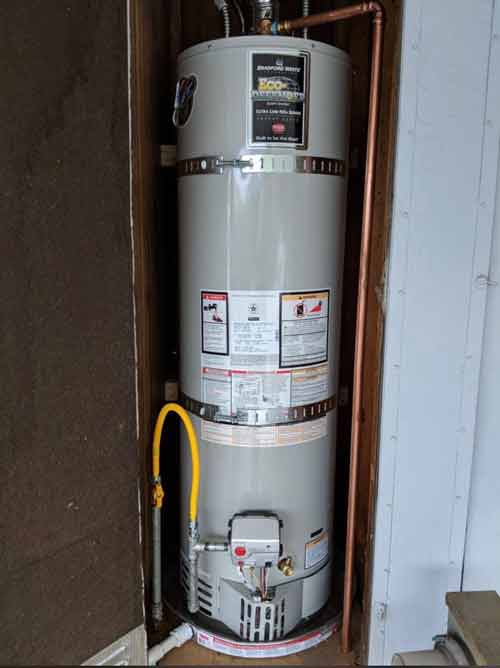
Installed a new high-efficiency water heater to provide reliable hot water and improved energy savings.
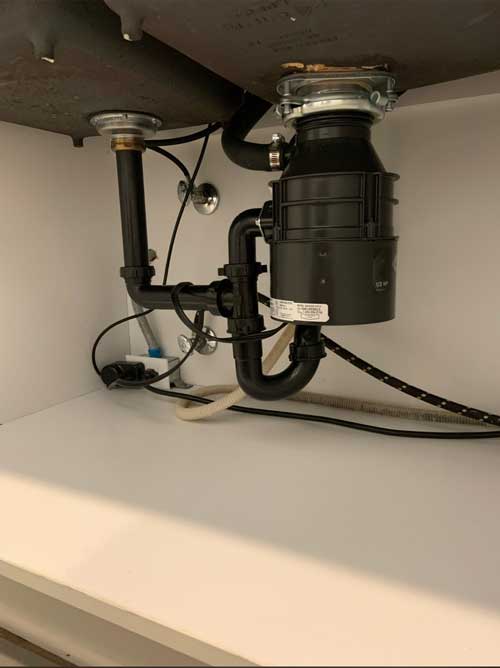
Replaced an outdated garbage disposal with a quiet, dependable unit for smoother everyday kitchen use.
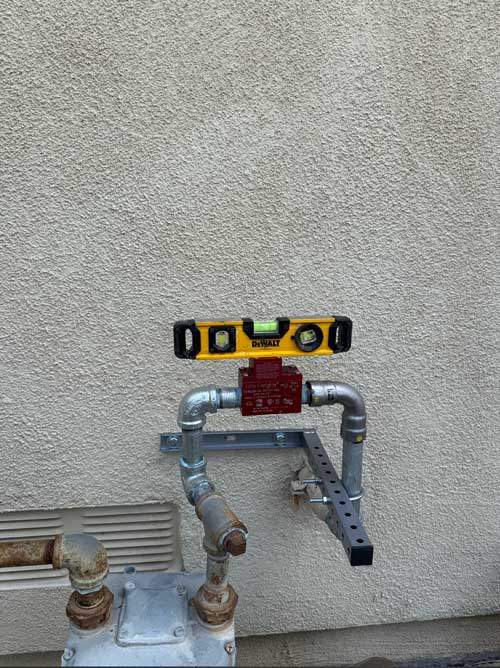
Installed an emergency gas shut-off valve to improve safety and meet current earthquake code requirements.
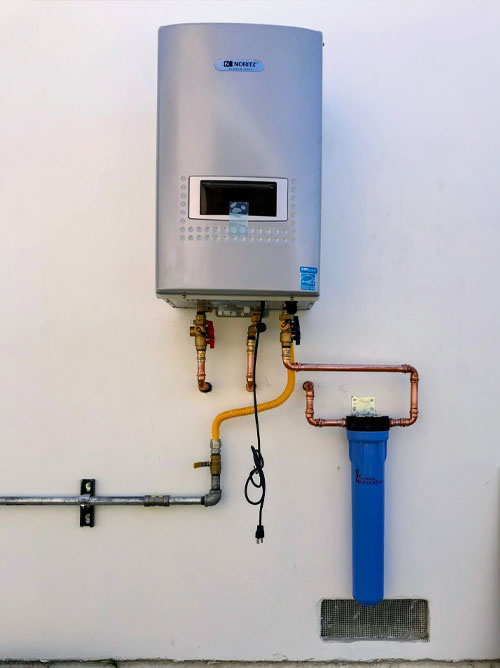
Installed a high-efficiency tankless water heater for endless hot water and lower monthly energy costs.

24/7 response for burst pipes, leaks, and overflows. No surcharge.

Fast, reliable fixes for leaks, pipes, fixtures and more. We get it done right.

Clearing clogs and slow drains with advanced equipment.

Expert repair and replacement for damaged or clogged sewer lines.

High-pressure cleaning that removes stubborn grease, roots and buildup.

From running toilets to new installations, we handle it all.

We locate and repair slab leaks with minimal damage to your home.

Using electronic detection, we find hidden leaks accurately.

Professional installation of standard and high-efficiency water heaters.

No hot water? We repair all makes and models quickly and efficiently.

Energy-efficient tankless solutions for endless hot water.

From gas leaks to damaged lines, we keep your property safe.
Licensed & Insured
CA C-36 Licensed #1024189
Local & Trusted
Proudly serving LA & OC for over 20 years
Excellent Reviews
Quality work, every time