One is the buried line running from your meter to the house. The other is the network of supply pipe inside the walls, attic and slab that feeds every fixture. They fail for different reasons, cost different amounts, and the first question worth answering is which one you actually have.
SoCal Plumbing & Rooter replaces both across Whittier — service lines from the meter in, and whole-house repipes in copper or PEX. We isolate the problem at the meter before quoting anything, because a service line replacement and a full repipe are not close in price and nobody should pay for the second when they needed the first.
This is the part almost nobody explains, and it decides who pays.
Whittier is not served by one water utility. Depending on the street, your provider is the Whittier Water Department, Suburban Water Systems, or the San Gabriel Valley Water Company. Your bill will say which. It matters because the ownership boundary sits in the same place for all three: the utility owns the main in the street and the meter itself, and you own everything from the meter to the house — and everything inside it.
So a leak on the street side of the meter is a phone call to your provider and costs you nothing. A leak three feet past it is yours. Same trench, same water, entirely different bill.
Turn off every fixture and appliance in the house, then find the meter and look at the small low-flow indicator — usually a red or silver triangle, sometimes a tiny sweep dial. If it is turning with everything off, water is escaping somewhere past the meter.
Now close the main shutoff valve at the house, where the line comes out of the ground, and watch again. If the indicator stops, the leak is inside the house. If it keeps turning, the leak is in the buried service line between the meter and the building — which is the classic cause of a wet patch or a stripe of unusually green grass across a front lawn in August.
That single test tells us more than any amount of description over the phone, and it costs nothing to run before you call. If you would rather we did it, we will — it is part of the estimate, and the estimate is free.
We're here when you need us. Call now or request service online.
Supply piping rarely fails all at once. It degrades for years, and the symptoms arrive slowly enough that households adapt to them — running the shower before the dishwasher, waiting for the brown to clear in the morning. Those are not quirks of an old house. They are a pipe telling you how much service life is left.
If several of these are true, it is worth getting the system looked at before the decision is made for you:
Brown or rusty water on the first draw of the morning
Clears after twenty or thirty seconds, then runs clean all day. That is rust shedding off the inside wall of galvanized steel pipe while the water sat still overnight. It is the single most reliable sign that the house is still on its original supply piping.
Pressure collapses when a second fixture runs
Someone starts the washing machine and the shower drops to a trickle. Galvanized corrodes inward, narrowing the bore until there is not enough volume for two draws at once. A half-inch pipe with sixty years of scale inside it can have the effective opening of a drinking straw.
More than one pinhole leak in the same year
A single pinhole is bad luck. A second one on a different run is the system telling you the wall thickness is gone everywhere, not just where it failed. The third is usually weeks away and rarely lands somewhere convenient.
Pressure that has been declining for years, not days
A sudden drop is usually a valve, a regulator or a break. A slow decline over a decade is the bore closing up. Homeowners often do not notice until they stay somewhere else and realise what normal pressure feels like.
Green or white crust at exposed joints
Look at the visible pipe in the garage, under sinks, at the water heater. Blue-green staining on copper or white crystalline crust at threaded galvanized joints is corrosion working its way out from the inside. What is visible is a fraction of what is not.
The meter’s low-flow indicator turns with everything shut off
The test in the section above. Movement with every fixture closed means water is leaving the system somewhere between the meter and the last tap.
A wet patch, a soft spot or a green stripe across the front yard
A buried service line leaking under a lawn or parkway shows above ground before it shows on the bill. A strip of grass noticeably greener and faster-growing than everything around it, running roughly from the meter toward the house, is a service line leaking directly into the root zone.
A water bill that climbed and stayed climbed
Compare against the same month last year rather than last month, so seasonal irrigation does not mask it. A buried service line leak runs continuously and does not fluctuate with how much water the household actually uses.
You have already had two or more slab leaks
At that point the question is no longer whether to repair the next one. Copper cast into a 1950s slab that has failed twice on different runs has reached the end of its service life, and a third repair costs more than routing the system out of the concrete for good. Our slab leak repair page for Whittier covers how we locate them; this page covers what to do when locating them stops being the answer.
Once we know which side of the meter the problem is on, there are three honest scopes of work. We will tell you which one you are in after we have looked, not before.
This is the buried run from your meter to where the line enters the building, and on most Whittier properties it is somewhere between twenty and eighty feet. If it is failing, replacing it is a discrete job that does not touch the plumbing inside the house at all.
There are two ways to do it. Open trench means excavating the full run — straightforward, and the right answer when the path is soft landscaping and the line is shallow. Trenchless means entry and exit pits at either end and pulling the new line through underground, which is how you avoid cutting a driveway, a mature front lawn or a hardscaped walkway to ribbons. We already run trenchless equipment for sewer line work, and the same approach applies on the supply side. We will price both where both are possible, because the cheaper excavation is not always the cheaper job once restoration is counted.
New service lines go in as type L copper or PEX rated for direct burial, and the work is permitted and inspected.
Replacing the supply distribution inside the house — every hot and cold run feeding every fixture. The pipe is routed through the attic and down inside the walls rather than back into the slab, which is the entire point: what is accessible can be repaired, and what is cast in concrete cannot.
We use copper or PEX-A depending on the house and what you want. Copper is the traditional answer and lasts decades. PEX is faster to install, needs far fewer wall openings because it runs in continuous lengths, and does not have the pinhole corrosion failure mode that put most Whittier homeowners in this position to begin with. Neither is a wrong choice and we will give you the real trade-offs rather than a preference.
Access is the part people underestimate: a repipe means opening drywall at each fixture group and at the manifold. We cut cleanly, keep the openings as small as the work allows, and patch and texture them afterward. Ask for that to be in writing on the estimate — it should be, and if another bid is materially cheaper it is worth checking whether the patching is in it.
Sometimes the right answer is neither. One bathroom group has failed, one run under a hallway has gone, or a single line is causing the pressure complaint while the rest of the system is sound. Replacing that section and leaving the rest alone is legitimate work, and on a house that is otherwise in decent shape it is often what we recommend.
Where it stops being legitimate is as a way to make a bid look cheap on a system that is uniformly at end of life. If a partial is going to buy you two years, we will say so.
Related: sewer line repair in Whittier if the problem turns out to be on the drain side rather than the supply side, and our full plumbing service in Whittier.
Over the county line in north Orange County, see water line replacement and repiping in La Habra — where the city runs its own water utility rather than the three separate providers Whittier is split between.
We're here when you need us. Call now or request service online.
Whether you're dealing with a plumbing emergency or a repair you've been putting off, we'll work with you to schedule service as quickly as possible. If your situation can't wait, our team is available for 24/7 emergency plumbing service.
Rather than guessing at the problem, our technicians carefully inspect the affected plumbing system to determine exactly what's causing the issue. Depending on the repair, this may include:
Finding the source of the problem first allows us to recommend the most effective repair.
Once we've identified the issue, we'll explain what we found in straightforward language and provide a free estimate before any work begins. If multiple repair options are available, we'll explain the advantages of each so you can make an informed decision without pressure.
Yes. The City of Whittier requires a building permit before work to alter a structure begins, and supply piping falls inside that. We pull the permit, schedule the inspection and meet the inspector — it is part of the job, not an extra. If you want to confirm the requirement yourself, Whittier Building & Safety is at (562) 567-9320.
It is worth caring about. Unpermitted plumbing surfaces later, usually during escrow, and the cheapest bid is sometimes cheapest because there is no permit in it.
Honestly, not something anyone can quote from a phone call. A service line replacement depends on the run length, the depth, what is on top of it and whether it can be pulled trenchless. A repipe depends on the size of the house, the number of fixture groups, single or two storey, attic access and how much drywall has to come out. You get a written, itemised estimate before any work starts, and the estimate is free.
What we can tell you is what moves the number, so you can compare bids on the same basis: the pipe material, whether restoration and patching are included, whether the permit is included, and whether the quote covers the whole system or a partial.
A service line replacement is typically one day, sometimes two if the run is long or the restoration is substantial. A whole-house repipe generally runs three to five days depending on size and access. Water is off during working hours and back on each evening in nearly every case — we will tell you upfront if your house is the exception.
Both are approved, both are used constantly, and the answer depends on the house. Copper is rigid, long-proven, and the traditional choice; it also costs more in material and takes longer to install. PEX runs in continuous lengths with fewer fittings and fewer wall openings, handles the hard water in this part of Los Angeles County without the pinhole corrosion issue, and is usually the faster and less invasive install. We will quote either.
If the cause was corroded galvanized pipe, substantially — that is the most common reaction we get afterward. If the cause was a pressure regulator, a partially closed valve or low street pressure, a repipe will not fix it, and we would rather find that out during the estimate than after you have paid for one. That check is part of the visit.
Almost never. Most repipes are done with the household in place. There is drywall dust, there are crews in the house during the day, and the water is off while they work — but it goes back on each night, and people generally stay.
Usually not. Insurers typically treat pipe that has failed through age or corrosion as a maintenance issue, which is excluded, and a planned repipe is maintenance by definition. Sudden resulting water damage from a burst is a different question and is often covered — that is the distinction we walk through on the slab leak repair page. Coverage varies between carriers, so read your policy or call your agent rather than assuming either way.
We're here when you need us. Call now or request service online.
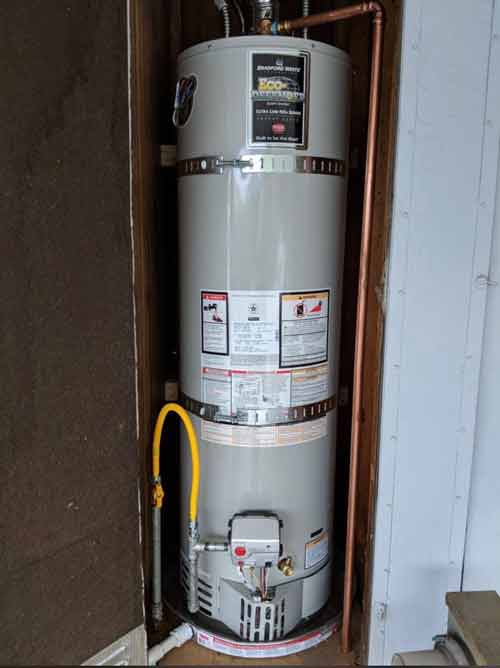
Installed a new high-efficiency water heater to provide reliable hot water and improved energy savings.
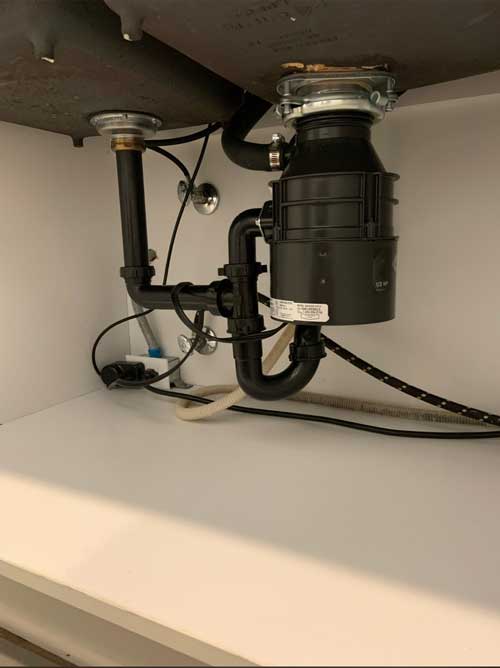
Replaced an outdated garbage disposal with a quiet, dependable unit for smoother everyday kitchen use.
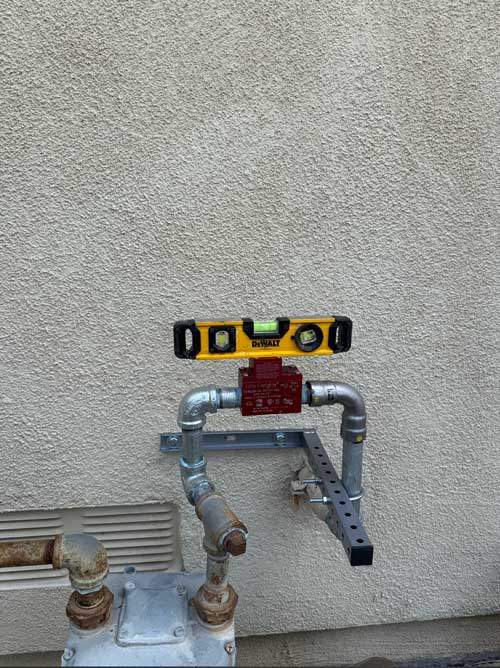
Installed an emergency gas shut-off valve to improve safety and meet current earthquake code requirements.
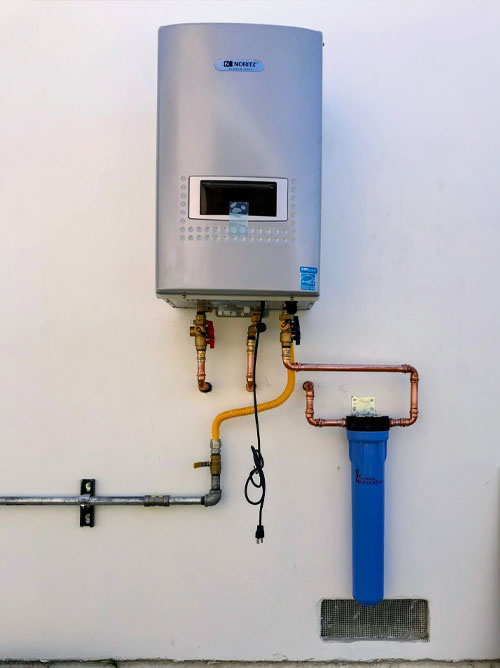
Installed a high-efficiency tankless water heater for endless hot water and lower monthly energy costs.

24/7 response for burst pipes, leaks, and overflows. No surcharge.

Fast, reliable fixes for leaks, pipes, fixtures and more. We get it done right.

Clearing clogs and slow drains with advanced equipment.

Expert repair and replacement for damaged or clogged sewer lines.

High-pressure cleaning that removes stubborn grease, roots and buildup.

From running toilets to new installations, we handle it all.

We locate and repair slab leaks with minimal damage to your home.

Using electronic detection, we find hidden leaks accurately.

Professional installation of standard and high-efficiency water heaters.

No hot water? We repair all makes and models quickly and efficiently.

Energy-efficient tankless solutions for endless hot water.

From gas leaks to damaged lines, we keep your property safe.
Licensed & Insured
CA C-36 Licensed #1024189
Local & Trusted
Proudly serving LA & OC for over 20 years
Excellent Reviews
Quality work, every time